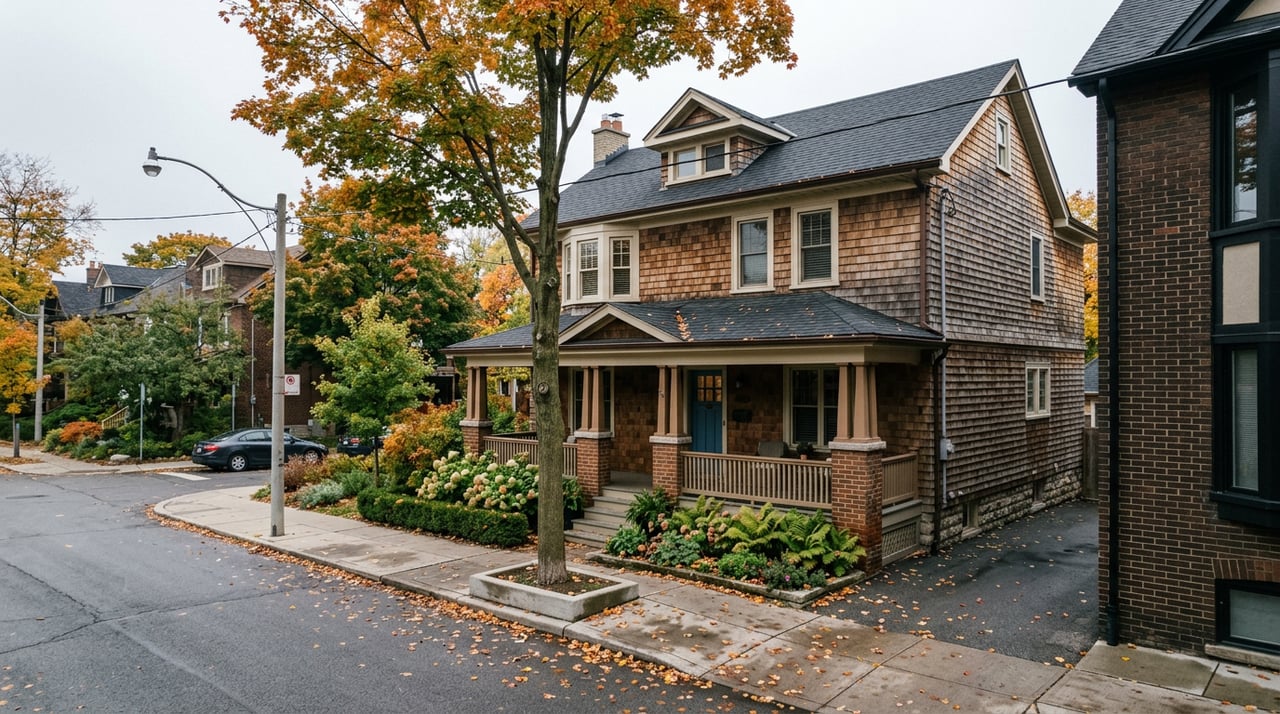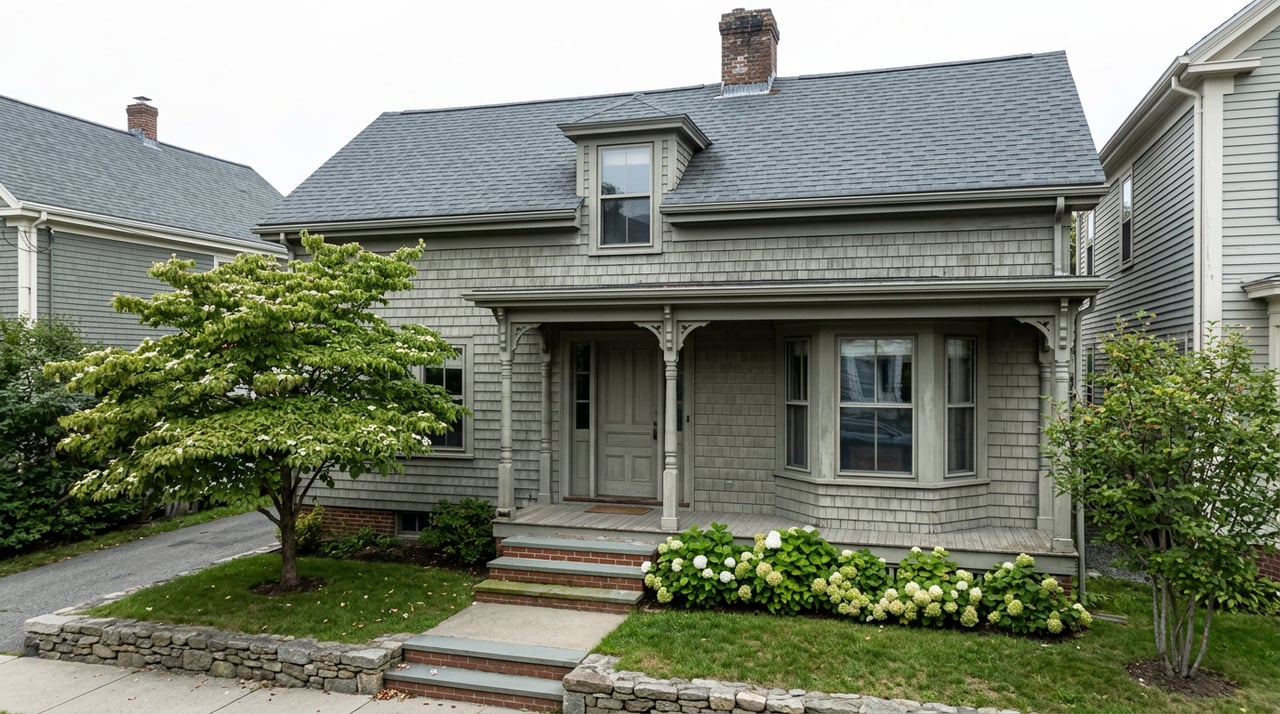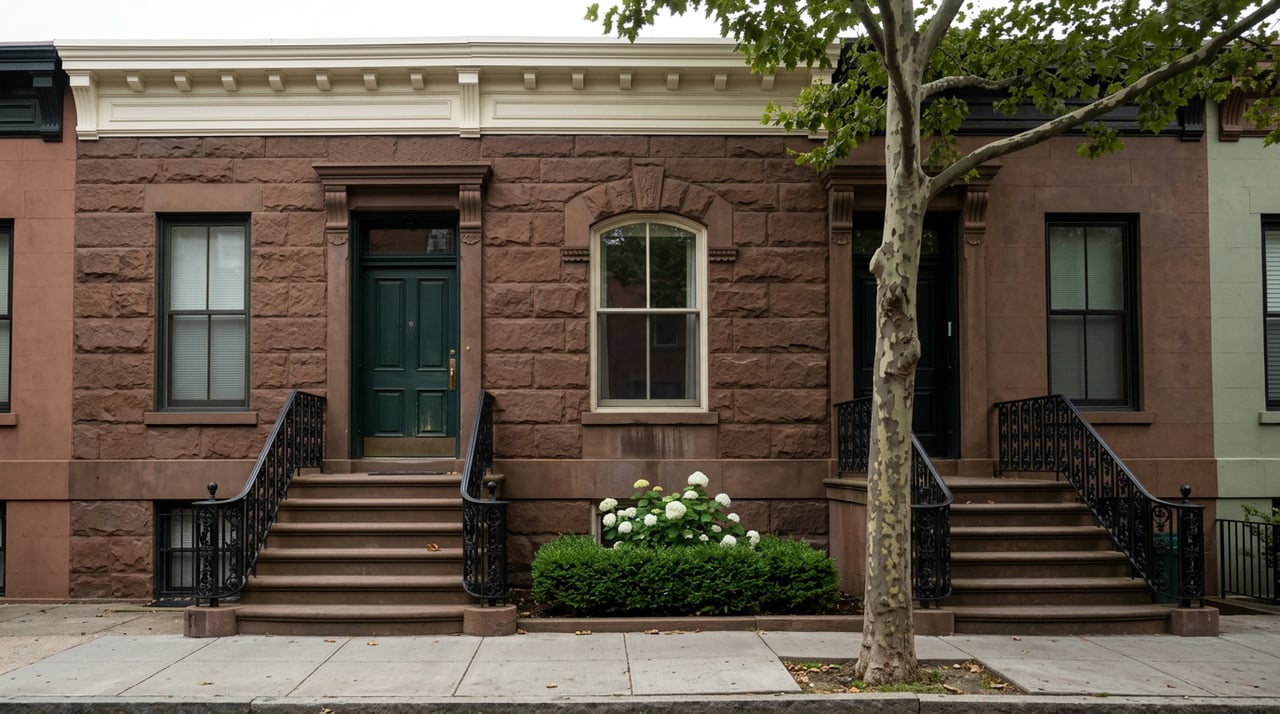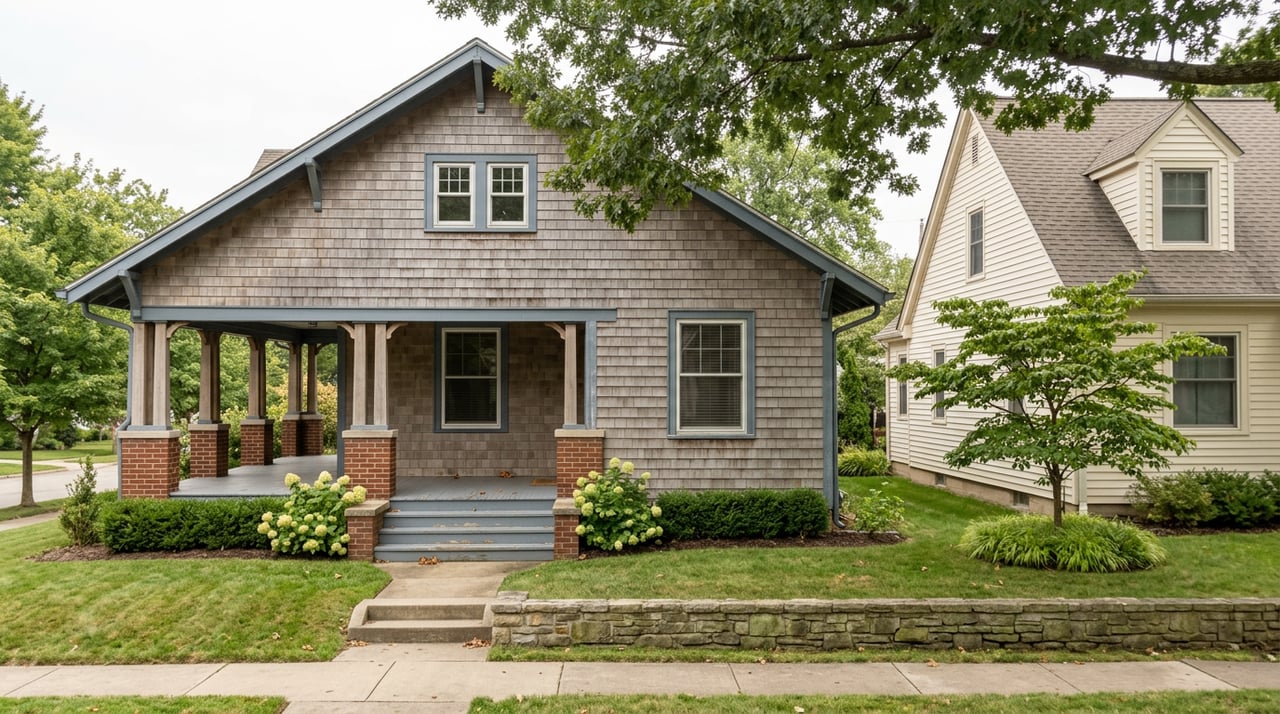
Walk east on Beverley Road toward Argyle and you're inside the new Beverley Square West Historic District. Keep walking three doors past the corner and you're not. Same porches. Same turn-of-the-century shingle siding. Same block, more or less. But one side answers to the Landmarks Preservation Commission now, and the other doesn't.
This isn't a hypothetical for anyone shopping Victorian Flatbush this fall. In November 2025, the LPC voted unanimously to designate two new historic districts, Beverley Square West and Ditmas Park West, adding more than 240 freestanding houses to the roughly 2,000 buildings already protected under the original Ditmas Park Historic District from 1981. The vote was clean. The boundaries were not. And the gap between the two, what got in and what got left standing one lot line away, is the thing a buyer actually needs to understand before falling for a listing photo.
What Just Got Protected, and What Almost Did
The two new districts cover architecturally similar ground. Beverley Square West includes 118 houses built between 1894 and 1910 across three blocks between Beverley and Cortelyou Roads, most of them designed by Brooklyn architects John J. Petit, John B. Slee, and Benjamin Driesler. Ditmas Park West, sitting just west of the original Ditmas Park district, adds roughly 127 houses built largely between 1902 and 1910, nearly half of them the work of a single architect, Arlington D. Isham.
At the public hearing in October 2025, 35 people testified in favor of the designations. Most of them also asked the commission to go further, specifically to include Westminster Road, Stratford Road, and stretches of Beverley Road that residents insist look no different from the blocks that made the cut. The Historic Districts Council, which has worked on Victorian Flatbush designations for more than two decades, said as much in its own testimony, noting that the excluded blocks contain houses with the same wood siding, wide porches, and leaded glass as the ones getting protected.
LPC's Director of Research, Margaret Herman, told commissioners the boundaries reflect nearly 20 years of repeated surveys, and that while some well-preserved houses do exist outside the proposed lines, they're scattered among more heavily altered homes in a way that breaks up the streetscape. That's the official answer. It hasn't satisfied everyone holding a deed on the wrong side of it.
The Boundary Doesn't Even Respect Whole Streets
Here's the detail that should actually change how you read a listing in this pocket of Brooklyn: the LPC didn't just draw lines around blocks. It carved out individual houses within blocks that otherwise made the district.
A heavily altered home at 359 Rugby Road was excluded from Beverley Square West even though the rest of Rugby Road got in, because staff judged the alterations too extensive to count. On the Ditmas Park West side, a house at 1135 Ditmas Avenue was pulled from the designation over structural issues, at the request of its own owner. Two houses, two different reasons, both proof that "my street is in the historic district" is not the same claim as "my house is in the historic district."
Janice Hamann, secretary of the Beverley Square West Association and a 38-year resident of Westminster Road, has lived through this line-drawing exercise from the excluded side. Her block, along with Stratford Road, Slocum Place, Matthews Court, and Lewis Place, was left off the district entirely, and she and her neighbors have pushed back publicly, arguing the commission never produced clear documentation showing why their homes fall short. Alice Barrett, another longtime homeowner nearby, has made a similar point: if the commission says her block lacks architectural integrity, she wants to see the study that proves it.
Lawrence Becker, whose house on Rugby Road did make it into the new district, has said the split creates a divide that didn't need to exist. He's not wrong that it's a divide. Whether it needed to exist is a matter of interpretation. Whether it exists in practice, for anyone buying or selling here, is not.
What the Line Actually Controls
Landmark status isn't a sentiment. It's a set of specific rules that attach to a parcel the moment the LPC's vote takes effect, which by law is immediate, not contingent on a later City Council sign-off. Here's what changes on the protected side of the line:
| Inside the new district | Just outside the line | |
|---|---|---|
| Exterior renovations | Require LPC design review before a Department of Buildings permit is issued | Standard DOB permitting only, no additional design review |
| Demolition | Effectively blocked without LPC approval, which is rarely granted for contributing buildings | Governed by standard zoning and building code, no landmark backstop |
| Backyard ADUs | New detached construction not allowed; garage conversions and interior ADUs permitted with LPC sign-off | Subject to the same NYC zoning rules, but without an added layer of design review |
| Future streetscape risk | Protected from out-of-scale new construction on adjacent contributing lots | Open to redevelopment consistent with underlying zoning |
LPC's Executive Director, Lisa Kersavage, addressed the ADU question directly at the November hearing, confirming that historic district status doesn't kill the accessory dwelling option outright, but it does route it through an extra approval step that a house three doors down never has to clear.
None of this makes one side of the line better than the other in some universal sense. It makes them different products wearing the same architectural style.
The Trade-Off Nobody's Pricing In Yet
Here's where this gets genuinely useful for anyone weighing two similar houses in this pocket of Flatbush. A house inside the new district comes with real insurance against a neighbor tearing down and building something out of scale, plus whatever premium buyers eventually attach to landmark status once appraisers and lenders catch up to it. A house just outside comes with faster, cheaper renovation approval and full flexibility on things like a garage ADU, at the cost of zero protection if the lot next door gets redeveloped.
A 2026 critique from a housing policy analyst who lives inside one of the newly designated districts made a version of this argument from the other direction, pointing out that Beverley Square West and Ditmas Park West together with the three existing Victorian Flatbush districts now cover close to 9 percent of Community Board 14's land area, all of it a short commute from Midtown, and none of it available for the kind of housing growth the city says it needs. That's a citywide argument about zoning policy. For a buyer standing in front of two houses, it's a reminder that the protection you're paying for on one side of the line is the flexibility someone gave up on the other.
Neither the LPC nor the residents pushing for expansion have resolved this. Advocates on Westminster and Stratford Roads say they intend to keep pressing for inclusion in a future round. Until that happens, if it happens, the boundary drawn in November 2025 is the one that governs what you can and can't do to a house you're considering.
What to Actually Check Before You Make an Offer
- Pull the LPC designation report for the specific address, not just the block. The commission has already shown it will carve individual houses out of an otherwise-included street.
- Ask whether the listing agent has confirmed landmark status with the LPC directly, rather than assuming based on the block's general reputation as "Victorian Flatbush."
- If the house is just outside the new districts, understand that its renovation timeline and ADU options will likely move faster than a landmarked neighbor's, but it also carries no protection against what gets built next door.
- If you're planning any exterior work, garage conversion, or addition, get a straight answer on which approval track applies before you write it into your offer.
FAQ
Does this affect the original Ditmas Park Historic District from 1981? No. That district's boundaries and rules are unchanged. This is about two new, separate districts drawn adjacent to it.
Could the excluded blocks, like Stratford and Westminster Roads, get added later? Residents and the Historic Districts Council have said they intend to keep advocating for it, but there's no confirmed timeline or guarantee the LPC will revisit the boundary.
Does landmark status mean I can't renovate at all? No. It means exterior changes go through LPC design review before you get a DOB permit. Interior work generally isn't affected, and even ADUs remain possible with approval, just on a slower track than a house outside the district.
If you're comparing houses on either side of a line like this one, or trying to figure out what a specific address's designation status actually means for your renovation plans and long-term value, that's exactly the kind of question worth a direct answer instead of a guess. Reach out to Erika Sackin and Jan Rosenberg for a free home valuation and consultation, and we'll walk the actual boundary with you before you write an offer.