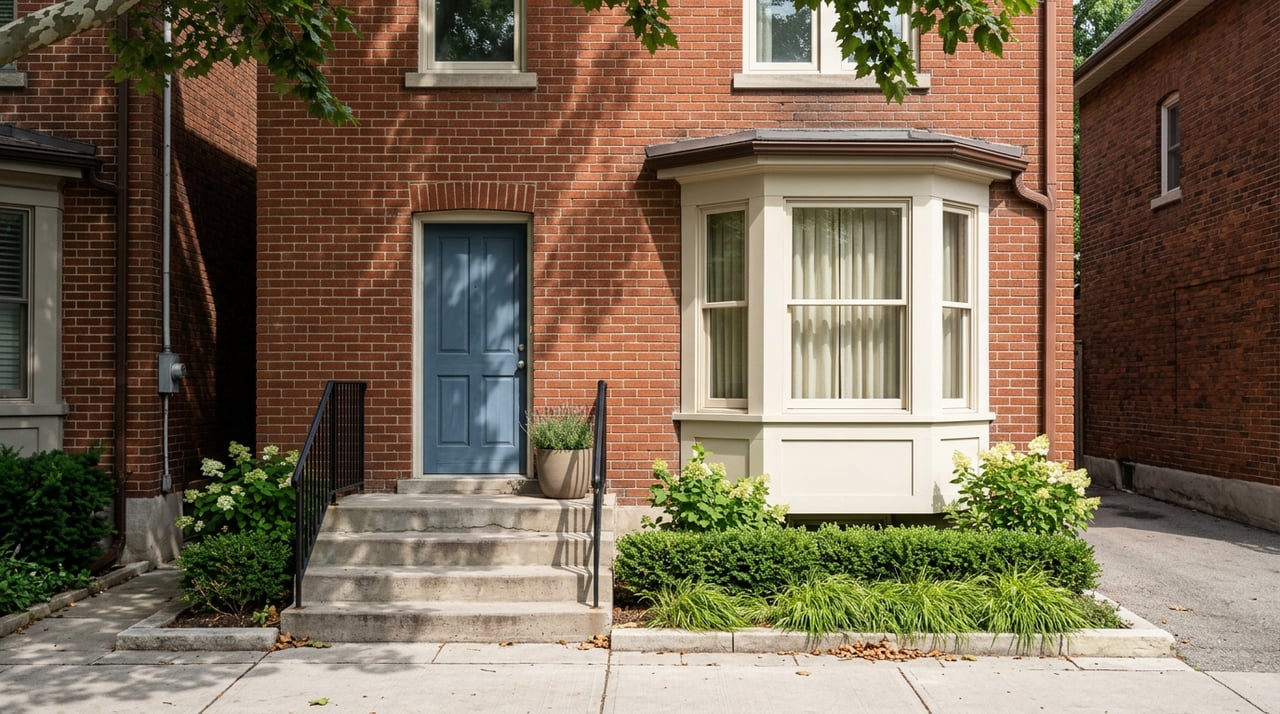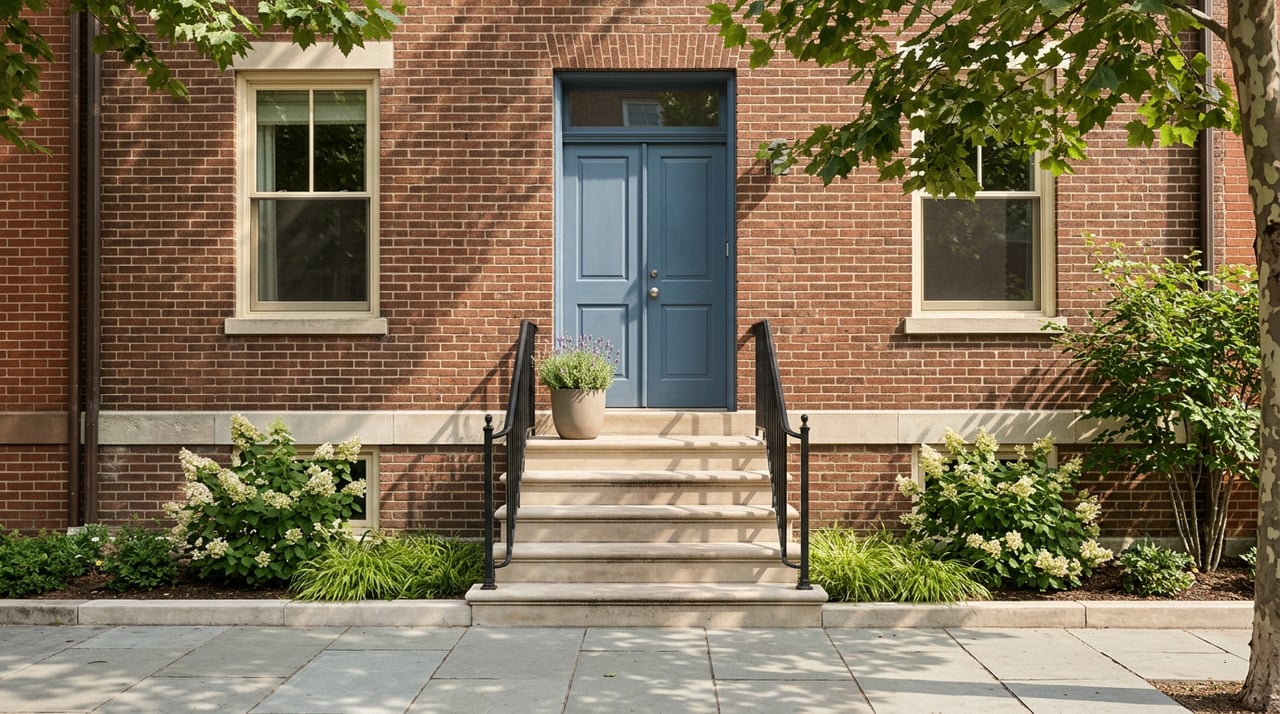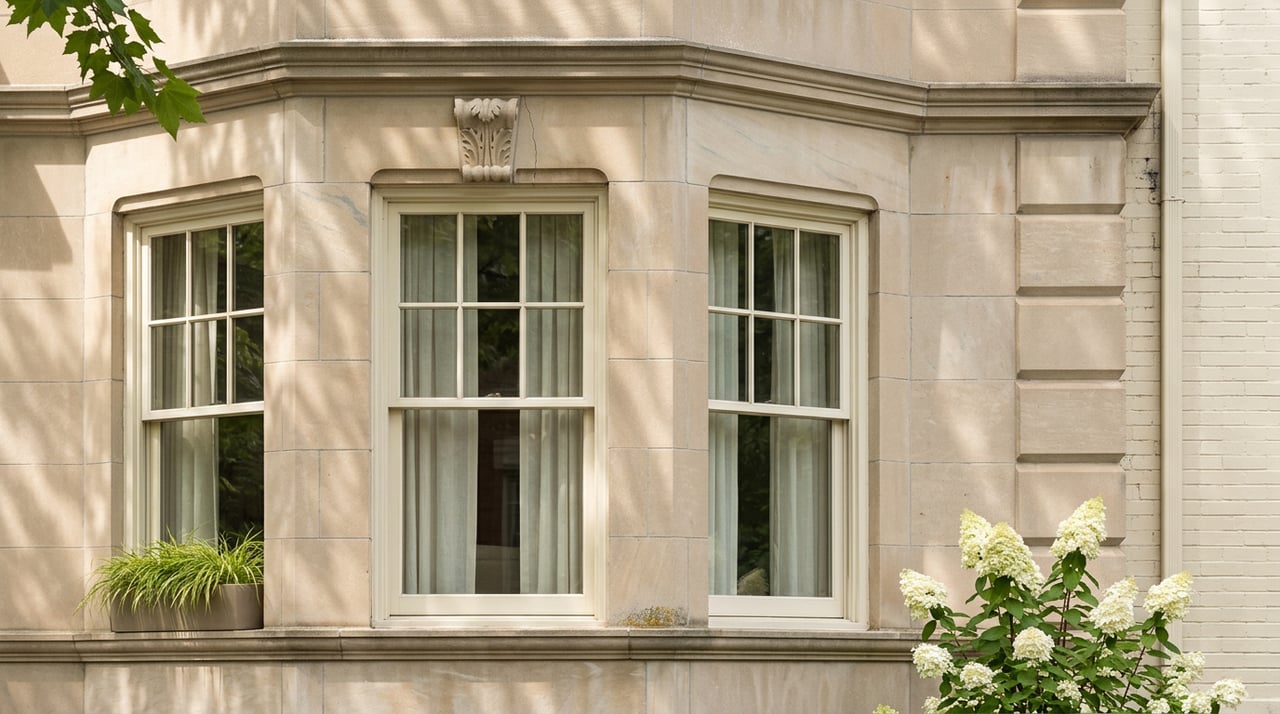
Two houses on the same block in Prospect Lefferts Gardens can look like siblings from the sidewalk and behave like different asset classes at the closing table. One can be legally converted into a two-family with a rental garden apartment. The other cannot, and never will be, because a covenant written into its deed in 1893 says so.
If you are shopping PLG against Park Slope or Prospect Heights, this is the friction the portal median hides. Before you fall for a limestone with a garden extension, you need to know which side of an eight-block line it sits on.
Inside Lefferts Manor: single-family only, brick or stone, at least two stories with a cellar, set back at least 14 feet. Perpetual. Enforced.
The Line That Splits The Map
The Lefferts Manor covenant covers an eight-block rectangle bounded by Lincoln Road, Flatbush Avenue, Fenimore Street, and Rogers Avenue. It contains roughly 600 homes. James Lefferts attached it to each lot when the family farm was subdivided in 1893, and it was designed with a specific target in view: two-family rowhouses that looked identical from the street to single-families were being built in Crown Heights and pushing south into Flatbush, and Lefferts wanted his estate excluded from that pattern.
The covenant is not folklore. It has been litigated and it has held. Developers who tried to sneak two-family builds past Lefferts were sued and lost. Owners who tried to subdivide or take in boarders after purchase were sued and lost. The Lefferts Manor Association, founded in 1919 after the family donated the homestead to the city, took over the enforcement role and still exists today. The New York City Landmarks Preservation Commission, in the report accompanying the 1979 historic district designation, described the Manor as one of the few places in the city where the original deed covenants remain in force.
So the address on a Winthrop Street listing is not just a location. It is a statement about what the property can legally become.
Two Markets, One ZIP Code
The neighborhood is really three inventories stacked on top of each other, and they behave differently.
| Segment | Where it sits | Recent price band | What the buyer is really buying |
|---|---|---|---|
| Single-family townhouse inside Lefferts Manor | The eight-block covenant zone | Roughly $1.9M to $3.375M | Architectural scarcity and permanent single-family use |
| Two-family townhouse outside the Manor | Blocks north and east of the covenant zone | Roughly $1.5M to $2.1M | House plus a legal rental unit |
| Prewar co-ops and new-construction condos | Ocean, Parkside, Flatbush, New York Avenue corridors | Wide range, low seven figures and below | Lower-maintenance ownership, board or condo governance |
The prewar co-op inventory has real depth here and is often overlooked in coverage that treats PLG as a townhouse market. Buildings like 590 Parkside Avenue, a 40-unit 1931 co-op, 80 Winthrop Street, a 144-unit 1927 co-op, and Arden House at 150 Hawthorne, a 1963 building, are the sort of prewar stock that sits well below the townhouse numbers. On the new-construction side, Calvert House at 625 New York Avenue and 184 Hawthorne are current examples of small condo buildings that give buyers a modern ownership structure without the co-op board process.
A buyer for one of these is not a buyer for the other, and the price gap between them is not about condition or finish quality. It is about what the covenant permits.
Why The Median Tells You Almost Nothing
Look at two data points that describe the same neighborhood at almost the same moment.
For the three months ending March 2026, Redfin reported a PLG median sale price of $995,000, up 13.7% year over year, with homes selling in 41 days versus 51 days a year earlier. As of early June 2026, StreetEasy's neighborhood page showed a median sale price of $1.35 million and an average of $755 per square foot.
Both are correct. They describe different mixes. When a quarter's sales lean toward avenue-block co-ops and small condos, the median lands under a million. When they lean toward the Manor and its adjacent townhouse blocks, it drifts closer to $1.35M. This is also the mechanical reason Redfin's median sale price per square foot came in at $709, down 27.1% year over year, over the same window. A shift toward larger, lower-per-foot townhouse product pulls the ratio down even when total prices rise.
The takeaway for a buyer is unglamorous but useful: never underwrite a PLG offer against the neighborhood median. Underwrite it against the segment median. The three inventories above are three different comps sets.
What The Spring Surge Actually Means
Momentum data has to be read the same way. The Brooklyn submarket that pools PLG with Bed-Stuy, Crown Heights, and Bushwick posted 49 contracts signed in April 2026, up 69% year over year, the strongest quarterly move of any Brooklyn submarket. The driver was buyers migrating east and south from neighborhoods where prices have moved past what they can carry.
Two consequences for a PLG buyer today. First, correctly priced new-construction condo units on avenue blocks have been going into contract in days, which means the deliberation window on that inventory is short. Second, Manor townhouses trade on their own timeline. They are scarce, they are covenant-protected, and the buyer pool for a specific block on Midwood or Maple Street is not the same buyer pool that is bidding on a 2025 condo on New York Avenue. Fast market data from the submarket as a whole can mislead you into thinking Manor inventory moves like avenue inventory. It does not.
Layered On Top: The Historic District
The covenant is the deeper restriction, but it is not the only one. The Prospect Lefferts Gardens Historic District was designated by the LPC on October 9, 1979, and much of the Manor sits inside it, along with additional blocks that were not part of the original Lefferts subdivision.
For a rowhouse or townhouse buyer with renovation ambitions, that matters for exterior work: windows, stoops, rear additions, roof work, facade repairs, demolition, and new exterior construction can all trigger LPC review. The process is manageable, but the timeline and design constraints have to be built into a renovation budget before the offer, not discovered after.
Stack the two together and the picture is specific. Inside the Manor and inside the historic district, you own a permanent single-family whose exterior changes are reviewed. Inside the historic district but outside the Manor, you may own a two-family, but exterior changes are still reviewed. Outside both, you have the widest set of options and the least architectural cohesion. Each of those three positions attracts a different buyer and prices differently.
How To Read A PLG Listing
A few practical checks before you write the offer:
- Is the address inside the Lincoln–Flatbush–Fenimore–Rogers rectangle? If yes, assume single-family use in perpetuity and price accordingly. If a listing markets rental income potential on a Manor address, that is a red flag, not a feature.
- Is it inside the historic district? Pull up the LPC district map. Exterior renovation scope will run through Landmarks.
- For co-op inventory, which building? The 1927, 1931, and 1963 prewar and mid-century buildings on Winthrop, Parkside, and Hawthorne each have their own house rules, financial condition, and board culture. Review the offering plan, recent board minutes, financial statements, and any pending major building work before you get attached to a unit.
- For two-family townhouses outside the Manor, confirm regulation status of any occupied unit. Rent history matters, and buildings of six or more units built before 1974 are the ones most likely to be rent stabilized. That is a separate diligence lane from the covenant question.
FAQ
Can the Lefferts Manor covenant be lifted or waived? It has been treated as perpetual and has been enforced against attempts to violate it. A buyer should assume it will continue to be enforced and should not underwrite a Manor purchase on the premise that the restriction will loosen.
Is every historic PLG townhouse inside Lefferts Manor? No. The Manor is eight blocks. The Prospect Lefferts Gardens Historic District, designated in 1979, includes additional blocks outside the Manor boundary, and there is significant PLG housing stock outside both. The distinction changes what you can legally do with the building.
Why is there such a wide gap between two-family townhouse prices and Manor single-family prices? The Manor product is scarcer, its use is permanently fixed, and its architectural cohesion is protected by both the covenant and the LPC. Two-families outside the Manor carry an income component that changes the math for a different buyer.
Does the covenant restrict cosmetic work inside the house? The covenant governs use and building form. Interior cosmetic work is a separate question. Exterior work inside the historic district runs through LPC review regardless of covenant status.
If you are weighing a Manor single-family against a two-family a few blocks away, or a prewar co-op on Parkside against a new condo on New York Avenue, the right comparison is not the neighborhood median. It is what each segment actually permits and what each buyer pool actually pays. The Rosenberg Sackin Team has spent years reading these blocks one deed at a time. Get your free home valuation and consultation, and we will walk you through what your price point actually buys on the block you have your eye on.