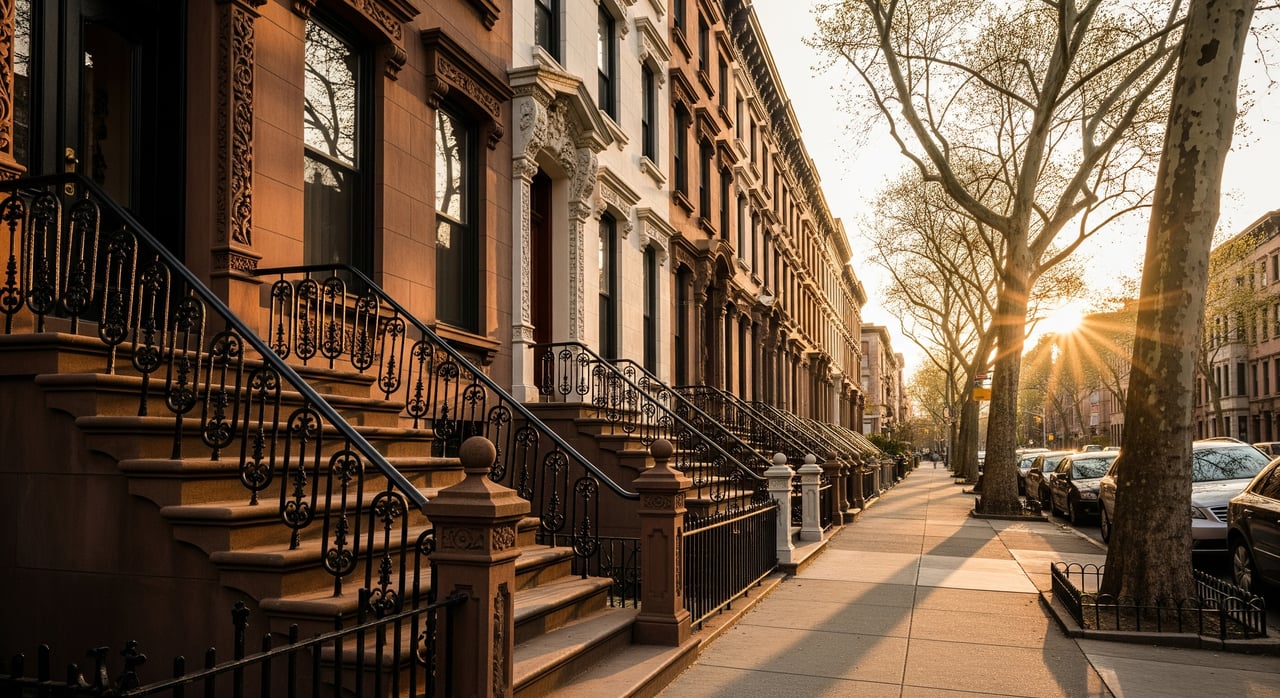
Is that Park Slope facade you love warm and russet or pale and creamy? If you have been scrolling listings near Prospect Park, you have probably noticed two classic looks: brownstone and limestone. Choosing between them is not just about style. It affects how you identify features, plan maintenance, and navigate landmark rules. In this guide, you will learn how to spot the difference at a glance, what each material means for ownership, and how to shop smart on these historic blocks. Let’s dive in.
Brownstone vs. limestone basics
Brownstone is a type of sandstone known for its warm red and brown tones. It tends to be softer and more porous, with a slightly granular texture you can sometimes see on carved details. Many mid‑19th century Park Slope rowhouses use full brownstone fronts or brownstone trim over brick.
Limestone is a calcium carbonate stone that reads buff, cream, or light gray. It often looks smoother and more uniform than brownstone. In Park Slope, you will see limestone on later Renaissance Revival and Beaux‑Arts facades from the 1890s to early 1900s, often with crisp classical ornament.
How to spot each on a walk‑by
- Color cues: reddish brown suggests brownstone; pale buff or gray suggests limestone. Brick with light stone trim can look similar, so check details up close.
- Texture: weathered or flaking granular surfaces point to brownstone; smoother, fine‑grained blocks point to limestone.
- Joints and blocks: limestone often shows precise ashlar courses and fine joints; brownstone may have thicker joints and more molded surrounds.
- Ornament: brownstone houses often have deeply carved stoops, bracketed cornices, and heavy stringcourses. Later limestone fronts lean classical, with quoins, pediments, and carved cartouches.
- Stoops: brownstone stoops are iconic in Park Slope. You will also find limestone stoops and some later granite or concrete repairs.
Park Slope layouts and interiors
Most historic rowhouses follow a familiar hierarchy. The stoop brings you to the parlor floor with high ceilings and large front windows. The garden or English basement level often holds the kitchen and dining with yard access. Upper floors are bedrooms, and top floors that once served as service space are often finished as bedrooms or living areas today.
Material and era often correlate with interior feel. Brownstone‑era homes tend to have tall parlor ceilings, ornate fireplaces, plaster cornices, and staircases set off a hall. Later limestone‑era townhouses may show more classical proportions and refined surrounds. Apartment buildings from the early 1900s near the park sometimes use limestone for full facades and have deeper plans with different circulation.
What the exterior means for interiors
Historic masonry walls are thick and provide thermal mass, but they usually underperform modern insulated assemblies. Many owners retrofit insulation on interior walls or roofs, especially in top‑floor spaces. Any cracks, deteriorated mortar, or spalled stone at the exterior can allow water in, which may show as dampness or efflorescence at the garden level. Always check lower levels for moisture signs during showings.
Maintenance and weathering to expect
New York’s freeze‑thaw cycles are hard on stone. Water that enters porous surfaces expands when it freezes and can cause damage over time. Salts and pollution add additional stress.
- Brownstone: more prone to spalling and flaking, especially at projecting elements like stoops, sills, and cornices. Carved detail may soften over time, and you will often see patching or dutchman repairs.
- Limestone: typically denser and more uniform, but sensitive to acidic conditions. You may see granular surface loss or dark crusts in polluted areas. Cracks can propagate along bedding planes and require careful replacement.
Smart care and repair practices
Good maintenance starts with regular checks. Walk the facade after winter and major storms, and plan a more thorough survey every 5 to 10 years.
- Repointing: use lime‑based mortars compatible with historic masonry. Hard Portland cement mixes can trap moisture and damage softer stone.
- Stone repairs: prioritize dutchman inserts or stone replacement by experienced historic masons. Avoid aggressive cementitious patching that does not breathe or match.
- Cleaning: test discreet areas first. Avoid abrasive methods that strip detail.
- Water management: keep gutters, downspouts, flashing, and stoop drainage working. Managing water is the best preventive care.
- Protective treatments: use water repellents only when appropriate and with expert guidance, since the wrong product can trap moisture or alter appearance.
Landmark rules in Park Slope
Blocks around Prospect Park contain one of the highest concentrations of intact 19th‑century rowhouses and are part of Park Slope Historic Districts overseen by the NYC Landmarks Preservation Commission. If you plan exterior work that affects appearance, such as masonry repairs, stoop restoration, window changes, or cornice work, you will typically need LPC approval. Some work may also require Department of Buildings permits, and stoop or curb projects can involve sidewalk permits.
Contractors should be comfortable submitting samples, drawings, and mock‑ups for LPC review. Keep records of approvals, materials, and methods. These documents are valuable for future owners and can help with resale.
What buyers should look for
Start with a careful walk‑by, then dig deeper during showings.
- Facade surface: note flaking, patches, or crumbling edges at sills, lintels, steps, and cornices.
- Mortar joints: look for missing or cracked joints, or very hard cement‑like patches that may signal past incompatible work.
- Alignment: check for bulging or out‑of‑plumb walls and whether sills and cornices read level.
- Water paths: streaks or stains under sills and above openings can show water movement.
- Stoops: identify intact treads versus concrete patches, and check balustrades for looseness.
- Garden level: look for dampness or efflorescence on interior walls.
Questions to ask the seller or agent:
- Has a recent facade or stoop condition survey been completed? Can you review reports and invoices?
- Were original materials replaced, and what stone and mortar were used?
- Were LPC approvals obtained for exterior work? Request Certificates of Appropriateness or correspondence.
- Are there any open notices from DOB or landmarking authorities about facade safety?
- How old are the roof and cornice, and when were gutters and leaders last inspected?
Professionals to engage before closing:
- A building inspector experienced with older masonry.
- A structural engineer if you see bulging walls or major cracks.
- A historic masonry contractor for a facade assessment and repair estimate.
- An architect versed in landmarked properties to advise on changes and LPC processes.
Financing and insurance notes:
Some lenders and insurers may ask for facade safety statements for older buildings. Significant facade work can affect insurability or require endorsements. Plan for ongoing exterior maintenance in your long‑term budget.
Tips for sellers of stone facades
Buyers appreciate clarity on condition and care. Provide recent facade reports, photos of repairs, and LPC approvals up front. This reduces uncertainty and can protect your pricing power.
When marketing, shape a true aesthetic story that fits the house. Brownstones near the park convey iconic Brooklyn warmth and carved character. Limestone frontages read refined and classical. Avoid promising low maintenance. Instead, highlight completed repairs, warranties, and relationships with reputable contractors.
Choosing what fits your life
If you love depth of color, sculptural stoops, and textured detail, a brownstone facade may speak to you. If you prefer smoother lines and classical ornament, limestone could be the right match. Either way, you are buying into history. The key is to understand material behavior, confirm condition with experts, and plan for thoughtful, landmark‑compliant care. That knowledge will help you buy with confidence and enjoy your home for decades.
Ready to compare options near Prospect Park or prepare your stone facade home for market? Reach out to the neighborhood‑first team you can trust. Connect with Erika Sackin / Jan Rosenberg for a friendly consultation and a clear plan.
FAQs
What is the main difference between brownstone and limestone facades in Park Slope?
- Brownstone is a softer sandstone with warm brown tones and a granular texture, while limestone is a denser, paler stone with smoother surfaces and more classical detailing.
Are exterior changes allowed on landmarked Park Slope rowhouses?
- Yes, but most visible exterior work requires NYC Landmarks Preservation Commission approval, and some projects also need Department of Buildings and sidewalk permits.
Do limestone houses require less maintenance than brownstones?
- Limestone is often more uniform and less porous, but both materials weather and need specialized care; brownstone is prone to spalling, while limestone can suffer chemical surface loss.
How can I spot stoop or facade damage during a showing?
- Look for flaking stone, cracked or missing mortar, patched treads, loose balustrades, staining under sills, and any out‑of‑plumb walls.
Will interior layouts differ between brownstone and limestone homes?
- Layouts reflect era more than stone; both often have stoop entries to parlor floors, garden‑level kitchens, and bedroom floors above, with later buildings showing more classical proportions.
Which experts should I hire before buying a Park Slope rowhouse?
- Engage a building inspector familiar with historic masonry, a structural engineer if needed, a historic masonry contractor for estimates, and an architect experienced with landmarked properties.