Thinking about buying in Fort Greene and wondering how the NYC mansion tax might affect your budget? You are not alone. If your target price is near or above $1,000,000, this one-time tax can change your cash-to-close number in a real way. In this guide, you will learn what the tax is, when it applies, and how to plan for it with clear, Fort Greene-focused examples. Let’s dive in.
What the NYC mansion tax is
The NYC mansion tax is a one-time, additional tax that applies to residential purchases of $1,000,000 or more. The rate is 1% of the purchase price once you hit that threshold. It can apply to one- to three-family houses, condos, and many co-ops.
In most transactions, buyers pay this tax at closing. Your contract and property type may impact how it is handled in your deal, so confirm with your attorney and title company before you sign.
When it applies in Fort Greene
Fort Greene’s mix of condos, co-ops, and brownstones means buyers shop across a wide range of prices:
- Many smaller condos and one-bedrooms are often under $1,000,000, so no mansion tax applies.
- Larger condos, multi-bedroom units, and smaller brownstones often sit near or above $1,000,000, so the mansion tax applies once the price is $1,000,000 or more.
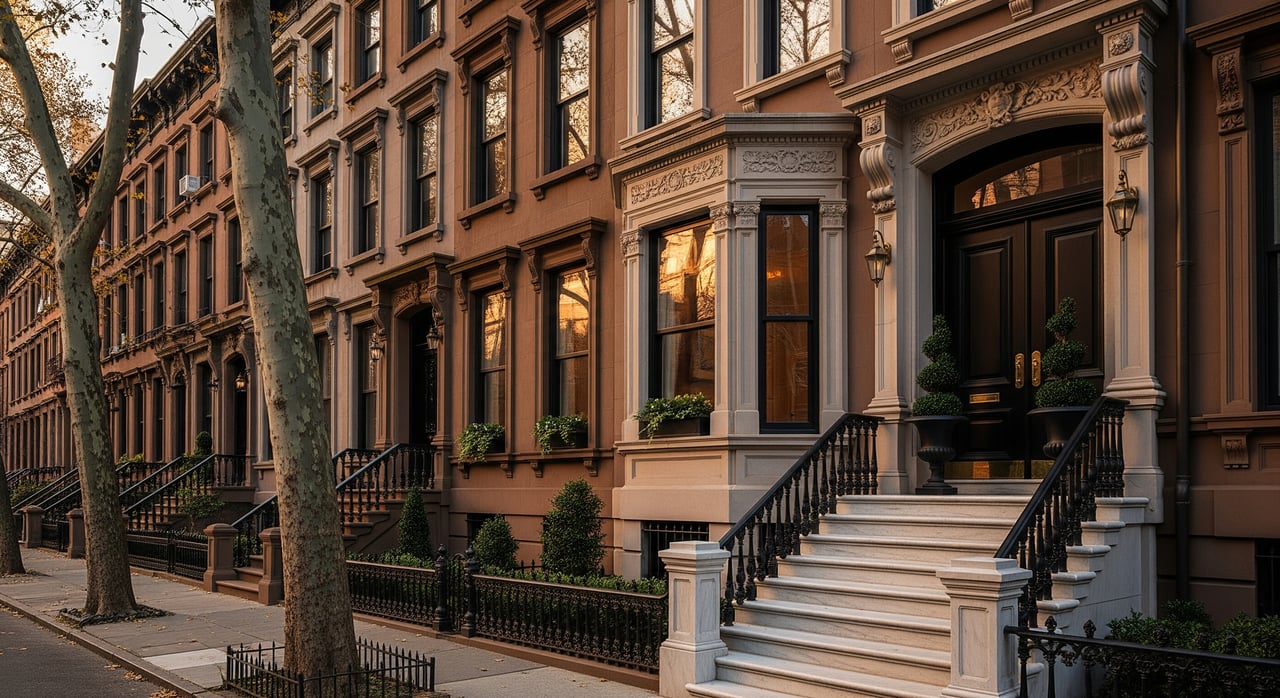
- Larger brownstones and renovated townhouses are frequently well above $1,000,000, so the tax almost always applies.
The practical takeaway is simple: crossing from $995,000 to $1,000,000 adds a one-time 1% tax. That is $10,000 at $1,000,000, which is meaningful cash at closing.
How it fits into closing costs
The mansion tax is only one part of your closing picture. Other items you may encounter include:
- New York State transfer tax and the NYC Real Property Transfer Tax. These are separate from the mansion tax. Exact rates and who pays can vary by deal, property type, and negotiation. Your attorney and title company will confirm how these apply to your purchase.
- Mortgage recording tax if you are financing. This is tied to the mortgage amount and does not affect all-cash buyers.
- Routine buyer costs such as lender fees, attorney fees, title and closing fees, inspection and appraisal, co-op or condo application fees, and prepaid escrows for taxes and insurance.
For quick planning, a useful rule of thumb is:
- If financing, budget your down payment plus the 1% mansion tax if applicable, plus roughly 2–4% of the purchase price for other closing costs. An illustrative midpoint is 3%.
- If paying cash, budget the purchase price plus about 1–2% for closing and title fees. The mansion tax applies on top of this if the price is $1,000,000 or more.
Fort Greene example budgets
Below are plain-language scenarios using the same assumptions throughout: 20% down and roughly 3% in other financed closing costs for financed buyers, and 1% for non-tax closing fees for cash buyers. The mansion tax is 1% on $1,000,000 or more.
Example A: $850,000 condo (below $1M)
- Mansion tax: $0
- Cash buyer closing fees (estimate at 1%): $8,500
- Financed buyer (20% down):
- Down payment: $170,000
- Estimated other financed closing costs (~3%): $25,500
- Estimated cash to close: about $195,500
Takeaway: Below $1,000,000, you avoid the mansion tax. You should still plan for your down payment plus typical closing costs, which often run about 2–4% if financing.
Example B: $1,000,000 brownstone (hits the threshold)
- Mansion tax: 1% of $1,000,000 = $10,000
- Example state transfer tax (illustrative): $4,000
- Example NYC Real Property Transfer Tax (illustrative): $14,250
- Cash buyer closing fees (estimate at 1%): $10,000
- Financed buyer (20% down):
- Down payment: $200,000
- Estimated other financed closing costs (~3%): $30,000
- Mansion tax: $10,000
- Estimated cash to close: $240,000 (down payment + closing costs + mansion tax)
- If you conservatively include state and city transfer taxes as buyer costs, add about $18,250 more.
Takeaway: Crossing $1,000,000 adds a one-time $10,000 tax. For financed buyers, that can push your initial cash meaningfully higher.
Example C: $1,500,000 large brownstone
- Mansion tax: 1% of $1,500,000 = $15,000
- State and city transfer taxes (illustrative): $6,000 and $21,375
- Financed buyer (20% down):
- Down payment: $300,000
- Estimated other financed closing costs (~3%): $45,000
- Mansion tax: $15,000
- Estimated cash to close: $360,000 (add state and city transfer taxes if you are responsible per contract)
Takeaway: The mansion tax grows in dollars as price rises, but the rate remains 1%. Your down payment and other closing costs become the larger drivers at higher price points.
Example D: $2,500,000 townhouse (high end)
- Mansion tax: 1% of $2,500,000 = $25,000
- Financed buyer (20% down):
- Down payment: $500,000
- Estimated other financed closing costs (~3%): $75,000
- Estimated cash to close: $600,000 including the mansion tax, plus any transfer taxes your contract assigns to you
Takeaway: Even at the high end, the mansion tax is a meaningful line item. Plan for it explicitly, and verify all allocations with your attorney and title team.
Strategy at the $1,000,000 line
If you are shopping near $1,000,000, a small price change can alter your tax bill:
- At $999,000, there is no mansion tax. At $1,000,000, the tax is $10,000. That difference can affect your cash to close and your buying power.
- You must report accurate prices. Intentionally misstating a price to avoid tax is illegal. Keep your negotiation clean and documented.
- You can negotiate who pays what in a deal. While buyers typically pay the mansion tax, payment responsibilities can be addressed in the contract. Your attorney will advise you on customary practice and your options.
How to avoid surprises
Use these steps to keep your budget accurate from the start:
- Ask your lender for a detailed Loan Estimate early. It should show mortgage recording tax, lender fees, and prepaids based on your down payment and price target.
- Speak with a local real estate attorney or title company. They can confirm whether the mansion tax, state and city transfer taxes, and other fees will show up on your side of the closing statement.
- Request local norms from the listing side. Ask what is typical in Fort Greene for transfer tax allocations so you can anticipate negotiation points.
- Build a conservative reserve. If your price is at or above $1,000,000, plan for your down payment plus 1% for the mansion tax plus about 3% for other financed closing costs. Cash buyers should set aside at least 1–2% for closing and title fees.
Local next steps for Fort Greene buyers
- Pull current price data to sanity check your target homes across condos, co-ops, and townhouses.
- Get pre-approved. Have your lender run numbers at a few price points around $1,000,000 so you can see the cash-to-close swing with and without the mansion tax.
- Loop in your attorney early. A quick consult can clarify which taxes and fees you will see on your closing disclosure, plus who typically pays them.
- Align your search with your budget. If the mansion tax stretches your cash too far at $1,000,000, look at strong options just below the threshold or adjust your down payment strategy.
Work with a local guide
Buying in Fort Greene should feel exciting, not confusing. With the right plan, the NYC mansion tax becomes just another line item you have already budgeted. If you want help modeling your costs, we are here to walk you through the numbers and the neighborhood options that fit your price range.
Ready to move forward with a calm, clear plan? Reach out to Erika Sackin / Jan Rosenberg for a friendly consultation.
FAQs
Does the NYC mansion tax apply to a $1,000,000 Fort Greene condo?
- Yes. At $1,000,000 or above, the 1% mansion tax applies to residential purchases, including many condos.
Can I avoid the mansion tax by offering $999,000?
- The tax applies only at $1,000,000 or more, so $999,000 would not trigger it, but all prices must be accurate and honest under the law.
Who usually pays the mansion tax in NYC deals?
- Buyers typically pay it at closing, but payment responsibility can be negotiated in the contract, so confirm with your attorney and title company.
Does the mansion tax apply to Fort Greene co-op purchases?
- Many co-op transactions are treated like other residential transfers and are subject to the same rule; confirm details with your attorney.
How do I estimate my total cash to close in Fort Greene?
- Start with your down payment, add 1% for the mansion tax if the price is $1,000,000 or more, then add about 2–4% for other closing costs if financing.